Showing posts with label review. Show all posts

Thursday, October 3, 2013

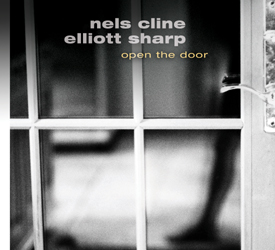
Nels Cline & Elliot Sharp: Open The Door


Public Eyesore again - Open The Door is PE121 (link to public eyesore in the side bar).

The name Elliot Sharp was familiar, though not Cline. Anyway, two guitarists. This release had a long gestation. Four tracks come from sessions in 1999 while the fifth track (Pietraviva) is live from 2007.

I put on this album with some trepidation, uncertain about the 2 guitar approach. But it is a lovely album. The Cline and Sharp have approached their interplay with a combination of musical artistry, serious skill, joyful interaction and a sense of play and adventure. 

Yes at times it is atonal or dense or oblique at times, but the two instrumnets complement each other brilliantly, one providing a base while the other may be searching the acoustic space. And both guitars are acoustic, adding to the atmosphere. There are elements of Spanish, blues, modernism and bluegrass emerging through the pieces; the lead and rhythm change; there is space and then density.

Obviously, if you don't like or want to try acoustic loose guitar, avoid this album. But if you are interested in an exploration which thrills, entrances and entertains give this a go.

Monday, September 23, 2013

Cactus Truck: Brand new for China


Brand New For China! is Public Eyesore release number 119 apparently came as a 45rpm disc (I imagine 10") or a CD. I have the second, and the tracks are listed as side A, side B and not on the album.

Cactus Truck are a three piece, John Dikemanon saxes, Onno Govaert on drums and Jasper Stadhouders guitar and bass. The album is to some degree what you might expect from a freeform line up like this. I played this more times than I expected to, and ejoyed it more than I thought I would.

It opens with Aporia, a viscious assault from the sax with driving percussion and guitar. This 10 minute track was Side A, and moves through some more restrained passages, swapping lead, but seems to propel itself onwards. Side B and the extra 2 tracks combine either short (3 at sub 30 second) bursts of noise and three more considered pieces at 5 to 7 minutes. Again there are periods of more melodic sax (such as Coitophobe) together with machinegun guitar. And under it all Govaert pounds away at the rhythm.

In total this is only 30 minutes long - and it benefits from that. The playing is focussed, the musicianship strong, and the raw entertainment and excitement carries you through the time easily. Don't file under easy listening, but do under thrilling and visceral. 

Wednesday, September 4, 2013

Dave Stafford (4) All things being equal

When I downloaded the Pureambient free compilations I was struck by one track that seemed more experimental, edgy. Then while I was first looking through his discography I noticed a track called Blint's tune - parts 18 to 34 I recognized that this was a reference to the final side of Godley/Creme's amazing six-sided opus Consequences. When I saw the intriguing track was from this album, I had to get it. I got All Things Being Equal from the Pureambient site, but it is now available at bandcamp.


This album has three sides to cover. 

The first part gave the album its title. It consists of 7 relatively short tracks, the first composed got the name Pastel = doubt and the idea for a binamial track titling popped into Dave's head, and the album title followed.(The naming also suggests links between the tracks)

The first track Annunciation = day exemplifies the complexity which Dave has inserted into these short pieces - the whole side is only 22 minutes long. A bright calypso beat with steel guitar swings into distorted guitar with a feeling of dread, tabla through back & then back to the steel, back again to distortion, a harp over ticking then theremin, distant guitar solo and beats, piano solo, bloops of synth with low guitar, an abstract segue into a piano solo which (like many elements here) could expand into a long track of its own. And finally it all dissipates into a long fade which is almost as long as the rest of the track. 


Drones open Pastel = doubt joined by melodica like tones (or high strings), with little synth eruptions, quite menacing and slow. A King Crimson feel to Improv = mincer with little percussion bursts, some bendy guitar, deep drone which suddenly bursts and guitar intersperses with Mellotron. 

Day = twilight seems familiar, a car engine tries to start as a calypso beat plays on tuned percussion - and the notes explain that it is track 1 with different settings: an amazing way of working and shows the wonder of modern electronics. The long fade becomes a swirling bleep. A lovely short bass, guitar drum Trio = power.

Doubt = certainty mysterious formless piece of ambience - deep underthrobs, slinking guitar, distant. And finally for this short excursion, Twilight = night takes the drone from the first track allowed room to display itself with some added bass, different reverb and ending this part of the set with a gorgeous long swoop.

Described as the 8th track, Blint's tune = parts 18-34 (note the similar naming) is in its originally format a 51 minute track, as the original mix. But you get a bonus disk (download) which is the 17 component tracks of Blint's tune presented separately in a mix that was created after the single version was made. It is an interesting presentation as it gives each piece its own personal space. 

17 tracks over 51 minutes is too much to try and describe in detail - and even highlights aren't quite the right way. So I'll just throw out some impressions. Opens with percussion & searching guitars finding way. (The drums on the suite are mainly from a piece created by Mike Bowman for Drone Forest to sample). Long slow loop, wild rocking guitar, a cathedral of layered loops, hidden tones, distorted dirty guitar swings from ear to ear, throbbing bass, dark. E-bow, mad percussive loop, building, reverse guitar, e-bow. Gritty guitar, harpsichord, birds reminds me of the original; a sample on a late track also does that), piano, melancholic accordion. A guitar-craft circulation (Dave regrets inserting, but it fits! The longest part) Weird choppy guitar over drums, the final track has cymbals, a drone, slipping into a long fade before the real conclusion on a different drone, distant birds, a dim light at tunnel's end. Changing moods, changing speed, changing density, dissonance to sonority! 

I have listened to individual tracks and the single long version - they each have their place: individually they work as short songs, as a longer suite the fades and segues are seamless but audible - they are smoothly done. This is an album that points in all Dave's directions at once - very satisfying and complex.

I have been lucky in the way I have got to know Dave's music - I didn't have the chance to pigeonhole him as looping-ambience as I have encountered his diversity from the start - Gone Native, this and the ambient albums. And now there is the pleasure of following his path through his various apps - in particular Mixtikl (go to Mixtikl eternal album here) as mentioned before on &etc.

(This will be my last Stafford retrospective review - I have bought another album recently (The haunting - lovely ambience: 6 midlength tracks with 2 whopper remixes). But I will leave it for you to explore, as all Dave's albums are available on Bandcamp which offers the chance of listening on-line for free &/or buying individual tracks or albums. Get there via the Mixtikl link. I haven't hit a dud one yet)

Saturday, August 31, 2013

The Unbearable Itch: a tribute to Little Fyodor

It is not often that a cover version improves or equals the original - I still think Leonard Cohen's Hallelujah is the best. 

I have only heard one Little Fyodor album, reviewed ages ago on the blog (Peace is Boring, from Public Eyesore), so can't speak comprehensively. But this set of covers The Unscratchable Itch (PE122: available from Public Eyesore) of his songs often improve and develop from either the originals I have heard or the impression given by that earlier release. The good ones emphasize the lyrics or musicality of the works, provide a diversity of voices & don't include the distracting babushka. As I wrote before, Fyodor can write a great hook & many are on display here. 

We open with Ralph Gean singing All my clothes are uncomfortable which seems to be close to the Fyodor ethos but Gean's voice has a more serious tonality which adds to the song. I believe in god (Patrick Porter) is also close to home but develops the song while on Get out of my head the Voodoo Organist gets down and rocks. 

The version of You give me a hard-on by Dan Susnara demonstrates where things can go wrong - a fake crooner with cheesy special effects tries for comedy and fails - emphasized by The Inactivists later version of the same song. With sax and guitar and some fabulous orchestration it takes the song seriously and makes it really cool but adds anger to the vocal. This is one of the highlights, along with Boyd Rice's The blackness which impresses with its simple dark production and female chorus.

I won't comment on every track - good or bad - but some of the other high points are Amy Denio who extracts the seriousness and music on The god gripe song and injects some pleasant female harmonies; a swampy psychedelic Happy people from Brian M Clark. A couple of tracks cutup the vocals and add electronica - Cruising (bummer scene) from Diablo Mountain sounds like a remix and Darren Douglas Danahy provides a change with abstract electronics and distorted vocals on No relief in sight.

Lasse Jensen does two songs - a cool translated version of I want an ugly girl and a smashup Everybody's fucking: playing around with song lyrics and just having fun.

Outside these there is a live death metal noise version of Won't somebody fill the void (Blood Rhythms), a rockabilly I wanna be the buddha (Evan Cantor), shouted punk That was a mistake (Us from the Superfuture) and Nervesandgel is a growling devil on Doomed. And much more 

The sequence is good - the first few tracks being more consistent with what I know of Little Fyodor and then moving into a range of directions with the music. And again, he can write hooky tunes, thoughtful lyrics and thought provoking comedy.


Monday, August 26, 2013

Three from Eh?

The first batch of new reviews - I have grouped these Eh? releases because they seemed to have something in common and yet be distinct. The main feature is that they are relatively restrained, closer to the ambient end of freeform, and also are not instrumental groups as such.

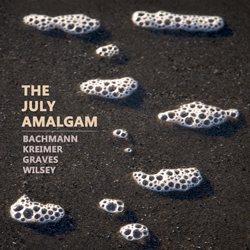
The July Amalgam (Eh?74): this album is in two parts. The first half is Wilsey, Kreimer and Graves playing on July 6 while the second substitutes Bachmann for Wilsey on the seventh. There is no detail on the disk about who plays what, and a web search was not much more helpful. Which has the advantage of listening to the sounds and letting them speak for themselves. The instrumentation seems to include things to bang and pluck, scrape and pling. There is perhaps some electronics - at times there are some deep tones coming through.

The first part, with 6 shorter pieces, seems a little more active, though both are quite restrained in their development. There is a track with a sound like paper being scrunched on it, another has something that is almost like a sample of one of those barrels of laughs, and some feedback. The 3 longer tracks in the second part develop more slowly and spaciously (spacily?), again there are some electronics, hints of voices, tones, uncertain sounds like crackling water. 

This album appealed to me as a nice abstract work to have playing in the background or to let move into the foreground. The pieces meander through their course, not trying to approach the state of music, but more an air of focussed intensity that develops into its own space.


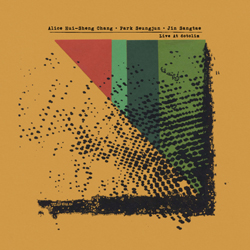
Looking on the web, dotolim seems to be a small venue for live webcast performances. Alice Hui-Sheng Chang, Park Seungjun and Jin Sangate performed their live at dotolim in Jan 2010 (Eh?70). Park and Jin provide a backdrop of ambient whitenoice crackling electronica through spring reverb, speaker, standlight, hard disk drive, radio and PDA. This varies in intensity and volume, although generally restrained and quiet sometimes plucky, others pulsing. The key to the release is Alice's voice - she is credited with 'extended vocal technique' and she has quite a range - sounding at times like Yoko Ono, Tuvan throat singers, quavery tones, moaning, a sax and more. The group move through their 48 minutes rising and falling, building and releasing, in a work that again provides a thoughtful mood.

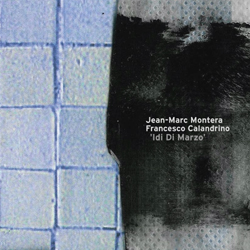
And then Jean-Marc Montera on guitar and fx and Francesco Calandrino on lofi stereos, manipulated audiocassettes, field recordings, clarinets recorded on 1 March and release on 'Idi Di Marzo' (Eh?64)(mysteriously as, as the Italian hints, Idi is ides). Their album together is quite a slippery beast though. The first track has scraping and rapidly played guitar over a protean bed of electronica that shifts and cuts like an audio whirlwind - buzzing crackling whining, samples emerging briefly, though a longer choir sings. Things get more restrained in the next track, with a hint of Calendro's clarinet which becomes more obvious on subsequent pieces, particularly track 4. As you listen your mind focusses on the electronica - the child's voice or the whooping in 3 perhaps - and then to the guitar which uses a range of tricks (scraping, percussive, treatments) and straight playing in varied styles. The balance between the 2, and the interplay, is well judged and satisfying. There is also a flow to the album - as it moves to the conclusion it passes through a noisy ragged track 5 with voice samples more prominent and then the more rocking conclusion of track 6.  This is a driving album, which pulls you along and demands that you listen to it. 

After finishing the review I realised that the albums are perhaps more different - if I had kept it at 2 we would be fine with a tying together here. July Amalgam and Dotolim both have a quiet earnestness - I see these groups sitting playing with serious faces to a group of intense audience members, they work the silences and subtly modulate; while in Idi there is more excitement and extravagant drama. I am not a ranker: each of these albums works its field skilfully and is satisfying in their own way - either as ambience or as pummelling noise.

Friday, June 7, 2013

Dave Stafford (3) Transitory

OK - the next in my series of Dave Stafford reviews - the why & wherefore are listed in the beforeposts.

Transitory

I bought this one on Dave's advice - Gone Native diverges from his 'signature' looping period, from which he suggested this.  And more recent correspondence has confirmed this as his favorite. 

Again there are extensive liner notes on line, so I can say this was created under some constraints. The pieces were made sequentially and independently; the first side was allowed to take time while the second half were to be made quickly; one word titles. The result is a lovely ambient loop album which doesn't suffer at all from the loss of post production track sequencing, where the quality doesn't drop in the second more intuitively performed works and the tracks have one word titles. (To be honest I would only call this a constraint if the words were picked first & the music written to suit them.)

We open with a string quartet sample at the centre of Circa, the guitar waltzing through and its gentle swooping reminds me of The Sinking of the Titanic in its reflection of nostalgia.

Then Raga, long held notes over Indian percussive loop. It builds and cycles, entrancing and eternal.  And then in what I think is one of his few missteps it ends - bang. No fade. This was a conscious decision to alert us to prepare for a new track. I just thought perhaps the download was truncated. I am still shocked by it each time I play the album.  A few tracks do it. 

While many of the tracts are like perpetuum mobile, Quartet slips between a drone and string-woodlike loops, dropping the drone for sections or with staccato breaks. Again a sudden end, but more fitting. 

Pulsar is a reverb cloud of spacey shards, as the name would suggest, while Arena is swooping ebow layers. This ends the first 'side.

Exert a short surging peaceful guitar loop/shimmer with a hymnal feel opens side 2.The organ tones of Vivid maintain the mood with a stately ebow with some almost subliminal orchestral samples. This is a subtle and deceptively simple track of which Dave is understandably proud. 

We are then Awash. A white noise is placed under loops that slither between guitar organ and voice tones. A nice twist is that by relooping the loops a decay is added to the mix. Relatively, perhaps deceptively, simple Pelican is a beautiful slow ebow tides.

The album ends with the longest (10+) piece - Wind. The flip to the indian mood of Rags, this has a Celtic air. A pipe-like loop swirls upwards in a layered loop before it trips and drops with a speedy little dance. 

A bonus track - Round - is added, but more of a bookend as it is 'merely' Circa backwards. It is faded in slowly and as it comes out of the darkness it is surprisingly recognizable, suggesting that the components that build it are quite symmetric with minimal attack or decay, but enough to give the track a strange familiarity. It drops away, returns and finally faded. 

It is fascinating that an album of loops ends with a track that loops back to the beginning. Dave could have claimed this was always his plan, buy admits the serendipity that is behind this satisfying structure. 

This is a beautiful ambient album which Dave places among his best and I would consider among the best ambient albums. It reminds you how great music is being produced around the world which is often found by luck - if I hadn't commented on his blog on Scape I wouldn't have found this music. 

I have one more album I want to review, mainly because it is another different side of Stafford & I want to indicate his breadth. But it won't be the last album of his I buy. 

Monday, April 22, 2013

Dave Stafford (2) Dreamtime and Sky Full of Stars

In my ongoing introduction to the works of Dave Stafford, 2 more albums - I am not reviewing in either chronological order, nor the order of my discovery, but rather in pairs that work together. These two albums belong together in my mind for structural and musical reasons, as well as being recent releases. 

We'll start with Dreamtime which is actually by Scorched by the sun and was released in January this year through bandcamp. SBTS is Dave Stafford with Bryan Helm - and while this is the first release by this 'group' Stafford and Helm go way back to 1989 where as alumni of guitar craft they formed The dozey lumps and Luxury yacht (1 album a piece) but more significantly formed Bindlestiff which released 6 albums in the 90s. These albums are well sampled on the 2 free pureambient compilations available on the site, and vary in ambience and intensity, but all very listenable. 

For various reasons there was a musical hiatus, but eventually Bryan sent Dave a link to a site with 12 pieces in it (as noted by David Byrne in his book, transcontinental collaborations are now able to spawn news ways of working). The basis for an album! When he started to work on the pieces, adding his layers, Dave initially fell back on his role as the guitarist in the duo (Bryan was keyboards) but it didn't work. And then he realised that his m-tron mellotron e-synth would work perfectly. He then set to work adding his parts (he has hinted that a bonus release of his and Bryan's components) to the 12 tracks, all bar some piano on the first part, played using the m-tron; then adding a mellotron solo in the middle of the album, and mixing the tracks so that the 11 'seams' are, while not invisible, at least not obvious and so the track unfolds as a single mutating and modulating piece. And it does work very well - this is true furniture-music {coincidence - while looking at the pureambient site I came across a single of a cover of Bill Nelson's furniture music: my reference here was of course to the original Satie quote} ambient where you can have it as background music but that repays closer listening. The album opens with an active ambient piece and closes with vocal tones singing a melody to layered synths. In between there are layers of drones and loops, notes and sounds drift through the mix - a descending riff, a call, some atonal, edgy loops - a mellotron flute, the satisfying intermission solo. And while each is part is an ambient gem, as they are sewn together to make a complex quilt the album becomes a complete experience that is more than the sum. Other than for musicological reasons, or that old faithful completism, I don't think the two halves of the album should be released as it is the combination that works (my first though was, hey yeah, that could be interesting, but I changed my mind).

Fast backwards to 2011 and Dave releases Sky Full of Stars. This was my fourth purchase, bought because it was described as a mellotron album - all keyboards (and bought before Dreamtime). While many of his releases are guitar/loop based I seem to be jumping about sampling his whole range (the looping will be in the next review). But when I first played it I was a little confounded - I had expected Epitaph-like flute or choral tones, the sort of things that bought 60s & 70s progrock to life! But here were long held tones layered, building density and texture. And then I was dumbfounded as, as I said to Dave in a two word review, it is simply beautiful. What the synth retains from the original is a warmth and depth of tone - and apparently you can recapture the sound of the original as Dave has used those on Dreamtime and Gone native. These pieces almost glow, and I have played them through my sound system to gain the full value from the tones. In New day dawning the deep resonances give a solid quality to the sounds. Elsewhere the tones pulse, drift, ring and just sing: there is also a sense of stately majesty throughout the album. There are tunes - The other half of your soul has a melody dancing slowly over the drones - and long evolving pieces (the title track is almost 18minutes based around some delightful backward tones - the shorter pieces tend to be more active). But if you like tonal drifting keyboard ambience with occasional pulsing, you will love this: as with many great albums it is really indescribable. Other than Simply beautiful

Sunday, April 14, 2013

Bowie's back

Surprisingly, at the moment Bowie can't feature in TIMR, because he isn't in any special way. I have some CDs, some downloads (and a couple of eBooks) and DVDs that together add up to his recorded output plus a couple of bootleg concerts and compilations (Toy, Scary Monsters outtakes) with only the Serious Moonlight DVD to get. But none of them are THINGS in the personal definition of this series. (That will be changed soon when the catalogue for David Bowie Is arrives from Amazon - interestingly Amazon is the vendor for the V&A exhibition, but the book is more expensive if you buy it via the V&A rather than Amazon directly [which is subtly referenced in the title of this post])

That all said, the music is more important than any physical things (though I hope their stories are interesting) and Bowie has been part of my musical life since he started. I remember Chris Kendricks playing me what is really the first Bowie album, selftitled or Space Oddity in his room, taping it (of course) and following him on and off since then. Low we know about, saw the Stages tour at Randwick racecourse with terrible echo from the stands, bought Lust for life and The idiot on the back of Bowie (love them both), enjoyed the peaks and troughs to varying levels (Let's dance wasn't that bad), was pleased to see the resurgence through Buddha, Outside (not sure about it - I think he was trying too hard), Earthling and on.

And thought that when he seemed to go into retirement that a fabulous career had wound up leaving a fantastic legacy of his own music and that which he had influenced.

So I shared the excitement and concern when I woke up and heard there was a new single. I was sure he had managed things since getting his rights back that this wouldn't be a 'do it for the money return', and it was a new album not a 'let's do a hit album live thing' (I love Cockney Rebel and have collected them and Steve Harley, but the Psychomodo tour worries me - I saw Adam Ant on a recent TV appearance here and it was terribly sad; and Thick as a brick II is enjoyable but..., and you can't really blame people from reusing  and developing their successes).

I prebought the album, got the single and was amazed. A beautiful haunting memory of his time in Germany, melancholy nostalgic voice of experience. Watched the video once on You-tube and enjoyed the distancing vision. And the cover art is a clever combination of feigned humility: remove my image but you all know what it is & who I am. But I hope it didn't cost mush.

Anyway the album was delivered electronically (I didn't listen to the streaming: our bandwidth is limited and work watches like a hawk). And away I went (with some precognition based on the initial reviews).

I won't try a track by track consideration, it is too well known, but rather some random comments.

The title is a nice tweak on 'today is the first day of the rest of your life' - it is what he did on the next day. It could also be a biblical reference to Genesis, first day, second day etc.

The next day is a strong opening track, but strangely disappointing: it too clearly echoes the sound and feel of Lodger, particularly Repetition I think. So bitter sweet - is this going to be a retrospective? And while the album does recall many of Bowie's periods, I think though that it is fresh enough (and his career has always, not surprisingly, reflected its past). The Lodgerlikeness continues through the next three songs, all with great hooks: Bowie can write a great melody - perhaps I have identified the key to his longevity! (Interesting while 'researching' this piece I found a look back at Lodger that identified it as a lost album in terms of significance to the canon - maybe this album will resurrect it).

Sadly, Where are we now is not representative of the album, even slightly, which is a shame because it is a beautiful song beautifully sung (and Bowie uses the full range of his vocal styles on the album) produced with restraint (overall), and 'the moment you know you know you know' is a wonderful lyric.

I think Valentine's day is a great song, but it disturbs me. It is commented on as a song about gun violence and school shootings. But it is facile, as that is what you really can expect from a 3 minute 'pop' song; it could be ambiguous as to whether Valentine is in the speakers head or a character,  but the assumption is the first, and thus it merely posits mental disturbance as the cause.I suppose it is a hommage to the 50s & 60s Teen tragedy song a bit like 10cc Johnny don't do it but from a different perspective; but not a comment on current events.

I love the 60s psychedelia of I'd rather be high, which is more of a character study, though 'be pleading for some teenage sex' even from a character sounds odd from a person of Bowie's age! Dancing out in space is another hooky song (I am not sure if this another in the line of outerspace songs, or the dancing is in space on the dancefloor).

You feel so lonely you could die has had some good reviews as a teen angst song along the lines of Rock and roll suicide, and it is one of his big buildy ballads, climaxing, and again harks back to the 60s songs again - backing vocals and the build. the die-ie-ie-ie. But the true album closer Heat is a fascinating glimpse of where Bowie could have gone (could go?). the comparisons to Scott Walker are apt - both the lyric obscurity ('the peacock in the snow..my father ran the prison..I can only love you by hating him more' - it sounds like it is referencing something) and the fractured music. The main difference is this is one track and not a whole album, which makes it much more revisitable. And is less relatable to previous songs - some of the Brel stuff perhaps.

The instrumentation, mix, orchestrations on the album are outstanding. Again, if this is the last album it will be a great ending - but what he has done here is also again think that there could be another Bowie album. We don't need it, his reputation is set so he doeasn't need it, but if another as good as this made its way out we would be very pleased.

And bonus tracks? They are on the download and the CD. Outtakes perhaps, but in what way really bonus?


Friday, April 12, 2013

Dave Stafford (1) Gone Native


So many people making good music across the world - as with the Knife, how you find them can be serendipitous.

I came across Dave Stafford after getting Scape (the app) and wondering if anyone had posted about how it works - what are some of the decision processes. Anyway, I found the best discussion was by Dave, and over the course of a few blogs he described his developing skill and excitement with it. I commented on that blog & later ones on other related topics. Followed him on twitter. A piece he wrote on the anniversary multidisk Larks Tongue In Aspic set indicated we had similar tatse.

The he wrote a long piece on Prog Rock and I could see he was a couple of years younger than me, but his muscal taste and development were similar to mine (though he is a music maker) though he got into more diverse groups and saw more live than me. And looking at his discography I could see an homage to Consequences. More comment exchanges followed.

So I decided that I really out to buy and listen to some of his music. So I went for Gone Native, the most recent and one described as reflecting his guitar prog rock side (the title of the website/label PureAmbient gives a hint to his broader range).

So I bought the album - electronic download. While I was there I also 'bought' the 2 free compilations that pull together works primarily by Dave and some of his collaborations. I highly recommend both as giving a good taste of the diversity of his styles: in addition to looping ambience, there is crafty guitar work, prog and experimental and more.

Anyway, Gone Native immediately lets you know where it is going - the opening Thanks, frank bursts out of the speakers with a ripping guitar solo over a crackling drum and bass support. Yes, this is driving ecstatic rock. Now guitar histrionics were never really my thing with prog rock (keyboard, flute, strings maybe) but exposure to Fripp, Nelson, Oldfield broadened my interests and across the album there is a range of guitar styles and approaches so that it is not a tiring testosterone fest. What it is a joyful exploration of various forms which include guitar (and many explorations within that including loops, e-bow, different stylings - you cdan hear hints of influences, but always incorporated and refreshed through Stafford's ear and own style).

For example Caladan is a eastern baroque piece with serpent-like woodwinds, the title track opens with cello and a rhythm loop and then builds before returning;. Whatever souls are made of is more ambient, and returns with an ambient mix later, there is an eponymous guitar line in Sinuous thread, and the bass of Wettonizer is reflected of the name and has hints of King Crimson. The first part of the album is quietly concluded by Flying solo which has a gentle guitar solo with a more aggressive piece in the middle and then a gentle fade.

And at this stage I would be happy to call it a great album - energetic, exciting, varied and joyful. And don't imagine it is 'just a guitar' album - there are some great synth lines and all sorts of other things happening.

However there are another 7 tracks, which are more ambient (described below). When I first listened to the whole album it seemed to me that there might be a benefit in mixing the tracks and moods a bit. But I looked at the blog and noted a piece about the writing and sequencing of the album.

Basically he sees it as two sides, as in the old album days, based on the music and how it was written. When I saw this the set clicked into focus. I have retitled them disk 1 and 2 (one is about 40 minutes, the other 30, which is more like a disk than a side) and I consider one the rock album and the other ambient. Within the first album there is a relaxing of the mood as you go through - but by splitting them it makes them work better for me as pieces: I will listen to one of the disks or the other depending on my mood or fancy.

So, on to disk 2. These are more ambient but also active - and recorded in shorter spaces of time. Layered and complex, they have space to explore and develop the possibilities of looping, atmospheric. The guitar (or guitar synth) is still very present - such as the delightful e-bow solo that is Wide open spaces, the stripped to the loops Whatever souls are made of ambient mix, and the processed guitar of Desert power 1 - drone mix. As a literal alternative to the more structured, written pieces on Disk 1, the second disk is passage into a different space (The blog mentions a track called The gemenon blues (long form) which appears to have been dropped from the final running order, which is a shame as it reads as an interesting dark twist!) And whether a Hidden track (named as such) really works on a download album ... there is the period of silence, and it is a nod to the genre.

So to conclude, this is a very satisfying double album - complex driven songs and intricate ambience.

Dave indicated that the album wasn't representative of his range - including the looping ambient side, though Disk 2 is indicative. And so I explored further, to be considered later

Wednesday, April 3, 2013

How music is found. The Knife, Fever Ray and Oni Ayhun

I was late to this but better than never.

Listening to Deborah Harry on Desert Island Discs, one of her tracks was When I grow up by Fever Ray. The 30 seconds they played intrigued me, so I went to the website to see who it was. 

And found Fever Ray, bought the album, the live album and mix eps and was obviously hooked - the voice, the music, the tone.

So I went back and found The Knife albums - Silent Shout is a nice dance electronics, but with my eclectic preferences liked the 'opera' Tomorrow, in a year even more.

The recent release of a preview track from the new album mentioned that the male half had released some EPs as Oni Ayhun. These are available from various download sites (if you go to his website you will be directed to a shop where they are sold in Euros for less than the Australian iTunes site - not sure about other areas http://oniayhun.com/OAR001.html). They are quite weird but wonderful minimal techno and well worth the asking price.

The new album Shaking the habitual is said to be a change in direction, and the advance track Full of fire combines the minimal madness of Oni with some full beats, more distorted edgy vocals and amusing changes that keep you onboard for the 10 minutes. I have preordered the album.

Which arrived today - comments will follow

Well - it probably fits in with comments across here about the length possible in downloads - it is a massive 96 minutes long (over the double album length). Except for a couple of short pieces 4:30 is the shortest and 8/13 clock in at over 6 and there is a 19 minute instrumental which could be Oni Ayhun. Could it have been editied down, probably - but there is something rather quixotic about the whole thing - you can hear the various strands of their careers coming together, with less focus on the melodic and more on the jarring and confronting - but with sweet spots. It is an album which will take time to absorb and may never like - rather like recent Scott Walker albums.

Thursday, December 16, 2010

Mike Olson: Incidental

Another release from Henceforth, further undermining my characterisation of them as a jazz label: let's call it modern eclectic.

For this album by
Mike Olson, I want to do something unusual in a music review - put in a spoiler alert. When I finally got round to listening to this, I hadn't read the liner notes or PR material. It struck me as a complex ensemble work - horns, woodwind, drums, guitars, vocals, keyboards, strings - which slithered and moved around. Then I read how it had been made, and it revealed a whole new perspective - what had already impressed now amazed. Because the whole work (45 minutes) is an assemblage. Each musician was recorded separately, playing a score (verbal and graphic gestures), and Olson cut, selected, manipulated, layered and combined these pieces to form the 6 Incidental tracks. The method reminded me of John Wall, but the outcome is quite different. rather than the minimal pieces Wall works with, Olson has taken full units and combined them. It is a seamless construction and the knowledge was a little like the reformatting of the your understanding the whole that comes at the end of a movie like Sixth Sense or The Others.

And while sometimes method trumps outcome, in this case the outcome is well ahead. Olson called the music as Incidental as it reminds him of that form - 'written to reinforce visual activity ... the music sounds like action to me'. You could also say it is composed from incidents which have been brought together.

The feel is of experimental freeform jazz - there are fluttering woodwinds and some squonking brass. But there are also lovely strings - creating a foreceful opening, or orchestrated beautifully in Incidental 3 - driving drum percussion, guitar. And voices - soft, processed, laughing. Some periods remind me of Zappa, others are tonal ambience, while the fragmented origin is also heard in some passages of super-human playing. The shift between active and at times aggressive playing (4 has some NINish elements) and ambient passages is handled dexterously, and the narrative of each track reinforces the filmic element that Notes in the liner (6, for example, starts quietly, builds a rocky fusion middle before easing into an ambient final section). And like a good filmscore separated from its visual home, this is music that makes you take notice and listen - to the skill of both players and composer.

An exciting release.


Saturday, December 4, 2010

Little Fyodor - Peace is boring

The resurrected &etc has, for the last few months, eschewed images. This has mainly been laziness, compendium reviews where there would be too many images, and a desire for a cleaner line. Little Fyodor demands a picture - he is a persona of Dave Lichtenberg, who has been making music for a while (thanks wikipedia), and the look is indicative of the music. This is the cover of Peace is Boring - on the website there are also many photos, and the the impression is of someone doing their best to look wacky/zany/nerdish. Anyway, this album from Public Eyesore (PE111) fits with their history of being a broad church which offers an outlet for 'outsider' art (not sure if Fyodor is, or is role playing, the outsider status)
Anyway, the music's the thing...
The album opens with a rewriting of Both sides now - Death sides now which is taken into dark places with subtle orchestration. The voice is strange - a strangled, twisted things that jumps around: perhaps Weird Al taken to another level? From here the voice is matched by the music, a hooky driving punkish rock drive, over which Fyodor's singing runs amok. The titles of songs suggests the lyrical direction: All my clothes are uncomfortable, Everybody's sick (which lists all the people/things that are sick), Cruising (bummer scene) (again with a darker tone to the music, but without obvious lyrical relationship to the title), Death wish (antiwar).

On a number of songs he is joined by Babushka (who also plays keyboards) - a cover of Open up your heart (and let the sunshine in), The god gripe song (which segues from Wonderful world to a list of things god's got wrong, such as why did you make the mosquito) and the canonical Boots. First time I listened I thought that the strangled female vocals was another Fyodor personality - but there are pictures of the Babushka on the web site and on the inner cover: but it still sounds like him to me.

The musicianship on the album is excellent - there are touches of synth and processing (in the closing sing-a-long, for example), and the band rocks out some very nice pop/rock. The songs have great hooks and it is quite a catchy album - all you have to do is accept the extreme melodramatic, strained vocals. Which can be worth it as it is really a fun album.


Tuesday, November 30, 2010

Scuff Mud: Eckhard Gerdes & Shelf Life

OK - the last of the current Shelf Life/Bryan Day related releases. This one is out through JEF (the Journal of Experimental Fiction, edition 36) which is curated by Gerdes, a writer of a number of novels. On the album Gerdes reads 15 pieces to a Shelf Life background (who are Bryan Day, Joseph Jaros, Alex Boardman, Andrew Perdue, Jay Schleidt on this outing).

I haven't read any of Gerdes writing, but the selection here is excellent for this medium. There is variety between pieces which depend on rhythms and rhymes, extended stories and dislocating word play through substitution. For example, z. buzz is full of word mastications, woodwork uses construction terms in a salacious double entendre, uh hunh uses a blues tick at the line ends, blues for osiris is a rhymed retelling of the Egyptian myth. Lists and repetition occur, rhymes can be almost McGonagallian (a compliment). His voice is mellow and rounded, carrying the material with gravitas, particularly when at its most amusing silliest. Even if you don't listen to the words the timbre and cadences are musical. And the material is memorable - when I replayed it after some time when I got to the story new president I was sure I had read it somewhere. This is also the longest track (7 minutes) of a short (45 minute) 15 tracker. There is even a seeming structure to the set, from the opening description of a desert image in a couple of starts to the closing surreal dream in adam among the elephants in the Sonoran desert.

As to the music, this is my favourite Shelf Life to date - on a number of scores. The instrument range is the broadest - including flute, voice, guitar, twanging things, electronics, percussion, samples, trombone and probably more. And the constraint of short pieces (I am not sure if these were specifically recorded or are excerpts from longer works) provides a perfect platform for appreciating the SL-sound. The setting on new president is relatively restrained allowing the story to flow, while snark is noisy which suits the l=a=n=g=u=a=g=e abstraction of the poem. At times the music develops with the words: wouldn't you know builds from shimmering electronics into jittery guitar as what was a seeming narrative goes into abstraction and then a sequence of past tense extrapolations (band is the past tense of bane); or the growth of industrial tones around the nonsense of the title track. A few times (most obviously in woodwork, but also wouldn't you know) there are voice samples which, through their restraint, enhance the mood.

I am not a great one for spoken-word albums, but the words and music are equals here - and that indeed the music provides a way into the words which would be less accessible on the page - providing a very satisfying audio experience.


Sunday, November 21, 2010

jeffrey roden: bridge to the other place

I have reviewed some of Jeffrey Roden's previous works - here on the blog. He plays bass guitar, solo.

In the backlog pile is (was, now) his Bridge to the other place, a set of 25 tracks averaging just over 2 minutes each. In the liner text he says he wanted to reduce (his) own work to the elemental and essential text. The result is a simply beautiful work - with both meanings of simple. The work is meditative, ambient inducing a contemplative mood in the auditor, suggested by track titles such as vigil, steps in deliberation, the voice that carries, oh god, acquiesence and more.

The slow travel of the notes recorded live, are like musical steps taken by a pilgrim, which occasionally break into a short dance, or move in unexpected directions, not detracting from the objective but rather adding depth and light to the journey. The album is recorded to allow the resonance of the notes and guitar to glow, and suggests that the decay was one aspect feeding into the composition.

You can sample a couple of tracks at Big Tree Music, and purchase the album. I recommend having a listen because this is a gorgeous album: and like the trend in slow food and living, we should find time for slow music that grows and develops carefully and thought(provoking)ful(ly).

Wednesday, November 17, 2010

Preslav Literary School - 4 releases

A couple of years ago I looked at 3 of Preslav Literary School's (Adam Thomas) releases (here) and now 4 more. A mix of downloads and a vinyl release.

Aura (amp046): Originally recorded for a dance performance it includes "a piano piece..., the words of Carlos Fuentes, odd environmental recordings, elements taken from decaying magnetic tape, and various other forgotten and untitled audio materials". The results is a delightful 3 act piece with an epilogue. The first (and third) partfeature the piano piece, possibly slowed and manipulated, loops from Fuentes (who has a high, almost feminine voice) and bursts of crackles which could be applause. The central section has metallic drones and minimal drones, with a developing percussive loop. The voice part returns with the piano before the scraping and twangclatter, tone fade out. Slightly melancholic, but more gentle relaxed, a lovely composition.

Beautiful was the time: is a layering of fragments from over 100 cassette tapes. John the Exarch starts with a noisy crackle then settles down to backward instruments and voices, a soft talking in the background, and seems to slowly wind down, becoming a drifting pulse. Crackling again, and a fast pulse, opens Ohrid must die - building with birds whistles, voices and breakfast crackling, shifting to pulsing layers of varying speeds, a dog barks, music loops within and clattering pans and voices intrude towards the end. Funereal music opens Cyrillic, singing voices and other music drifts around, and a more gentle mood, reminiscent of Aura, envelops. Voices chattering at the end dispel the mood and close the album, with a satisfying reflection of the sampled origin. These pieces contain a strong narrative and subtle use of the original material, rather than being simple cutandpastes.

In Fractals: is a more straightforward composition. There are three minimalist drone pieces: as the name suggests, there are subtle changes throughout which you don't notice until you realise the balance or beat has changed - plus there are some strategic changes. The title track has a drone, a pulsing white noise and a subtle minimal melody; Sierpinski Triangle starts with a distantsounding hurdygurdy tone (or orchestral sample or ...), phasing in and out, but becoming clearer, a tuvan-drone, all rising as a martial beat seems to develop, but sounding like an underwater masterpiece. And finally Last One Standing is a mellow ceremonial layering of drones and pulses that weave in and out, some backwards shimmery and ringing parts, and like the others slowly build/changes/develops. Classical minimal drone works.

Echolalia: this is the concert result of a tapeloop workshop held late last year on how to make and play cassette tape loops. 11 people were involved and the result reflects this diverse 'band' - each side consists of a series of moments where different loops take a solo, supported by background work, running for about 3 minutes before segueing into the next piece. The tapes range from snatches/slices of voices, songs, instruments, percussions, tones, backwards versions of all the previous; and while there may be 11 players, there seem to be about 4 or 5 layers maximum. A surprising and satisfying aspect is that it was mixed and mastered as it was played live, with no extra overdubs, by the cult Berlin dubstep producer Lord Cry Cry (Blunt Force Trauma): the two sides work so well, flowing seamlessly while maintaining a mood, which is very impressive - you might have expected a mess! And there is a difference between the two sides - Side B seems to have more vocal and musical elements to me - and they each end on a single sample: A on some ethnic-inflected rock and B on a worrying how-to-hunt-elk tape.

This is a fascinating body of work - the thought of tapeloops can sometimes be daunting, but PLS whether solo or with his collaborators on Echolalia, manage the layering editing and selection to produce sounds which are intriguing, seductive and musical. In addition, you don't have to buy before you try - all can be previewed/streamed as linked or on soundcloud, and all but Echolalia are available as free/paywhatyouthink downloads. A very generous gesture - I must admit to having reviewers soft-versions, but the real life releases look like they would be well worth getting.

(now, I have to get preslav sprout out of my mind)