Sunday, February 10, 2008

More Mystified

Following from the blog of 9 January some more on Thomas Park aka Mystified.

First, as noted at the end of that post I had only scratched the surface of his discography by focusing on Webbed Hands and Tree Trunk. By closely scrutinising his text discography (on the mystified site) I found a heap more. Regular readers of &etc across the years will know I am a bit of a completist where time, money and downloads allow. So I have been gathering these from a welter of labels (Nishi, Dreamland, Smell the stench, Jon7, Enough, Batman and Robin, Earthmantra, Blackflower, Infinite Sector, Dark Winter, Negative Sound Institute, Ben
ekkea, 20kbps, non-quality audio, TZP drone, Kahvi, Sine fiction, 4 4 2, Umbrella, Roil noise: is them all I think) [and will have to temper my urge to then download the rest of the labels - way too much music]. There are at least 45 releases available free from these sites on top of the thirty odd from Tree Trunk and Webbed Hands.

Recognising that this is a simplification there have been three 'phases' to Mystified's career to date
  • the first saw releases on Webbed Hands and a variety of net labels
  • then there was a greater focus on his own label Tree Trunk, but with other net labels getting a good look in
  • while currently cd-r and real label releases are coming to the fore.
Basically a fairish overview, but noting that there are still current web releases. Another simplification would be to suggest that the earlier stuff is more beaty, contains more samples while latterly there has been more minimal ambient. I would also venture to suggest that Mystified places his releases: the Nishi stuff is nicely beated and perhaps reflects the Autocad (Park's previous incarnation) relationship with Rapoon; while 20kbs is more dubby (an interesting label, its name describes its download aesthetic - small lo-fi); Umbrella noize has a couple of albums featuring sonography. Again, there is more here than is possibly to reasonably review, and all I can suggest is that you sample a fair whack of it as there is a host of high quality ambient, dub, grooved, minimal, sonographic music on offer. As analysed below they combine shorter tracks and often a broader diversity (eg Puzzle Street on Jon7 has moved from a groovy piece through some sonography (and back to it now) to AM layers which is extremely minimal: a hum and the end groove of a record).

(More generalisations - Mystified swings between long album length works and shorter collections of tracks about 6 minutes or less in length; a further generalisation - these collections are more common on the 'other label' releases. As of my collection today, 60% of the tracks on Webbed Hands/Tree Trunk are less than 5 minutes compared to 88% on other labels; the data for less than 7 minutes is 73% and 95% [it's the scientist in me! - I would do it by year too if I had the data.])

A problem that Mystified has created for himself, however, is why would anyone buy any of his releases? With so much on offer on the web, for free, purchasing may seem a poor second cousin to some. Reasons to buy however would include - better sound quality; having an actual artefact (which is important to some people); attracting people with a penchant for collecting something nearly unique by having a small run; and recognising that there will be a small but dedicated (and fluid) group of people who like the music so much they want as much as possible, another reason for smaller runs as this is not a huge market (but it is amazing how much product a prolific artist like Muslimgauze or Merzbow can sell). Anyway, in response to my previous review, Mystified has sent me two of his recent cd-rs.

Hazy Waves came out on Cloud Valley Recordings (cv-30) which is based in Canada and has runs of generally less than 50. Simple packaging that includes a track list, the cd-r is hand artfied and contains 9 songs in 43 minutes. In many of the long-form Mystified works there is a static minimalism: exemplified by Constant, which spawbed a series by other musicians, or his take on Rain. This disk contains what sound like fragments captured from longer works which have been going before you heard these bits and will still be going while you are listening to the next track. They fade in and then fade out. These are lovely pieces, Wavelength drifts in an eno-ish way exemplifying the structure here: a lovely tonal work playing over a soft buzzing - a juxtaposition seen throughout. Transmutation is whooshing over a watery flow; Fuzz drone has musical tones which surface through the fuzzy hiss and deep thrumming; Many legs with oscillating pulses, chattering and vinyl crackle-spatter. Another aspect is heard in Bring rain where a roiling cloud of sound is constantly moving forward without arriving, Amorphous is an amorphous subsonic rumbling, while the title track features a rapid chittering that sounds like a whooshing that softens and becomes more whooshy, again with tones deep within - as with much of this minimal ambient there is a psycho-acoustic quality where your brain creates other sounds from within the stasis. The edit from Chronos has more variability in its short presence, and is a fine conclusion to a nice little album (edition of 33 - hurry).

The other is Escaping Physics, the first release from Sentient Recognition Archive, in an edition of 50: 11 songs in 49 minutes. Again, these are short, often excerpts, but seem more enclosed than Hazy. A couple of tracks reflect the cover image and have a watery theme - both Freak of physics and Pulsar 2 have a dolphin or whale like sonar sweeping through with undertows of humming ambience. Another group suggest site recordings: wind blowing on a microphone in a storm (Class conflict 2) with a high cycling, a wind swept building softly shudders in Shuffle drone and rain over a melody is The ocean inside. Roww has a voice-processed-ish rhythm with rachets and tones and a Tuvan-ishh growl offers Mild alarm with a swirling wind over. The other three tracks - Class conflict, Mild alarm 2 and Revving - are all a bit more edgy with high tones, buzz saws or drones. So again a fine range of styles across this and slightly more available.

To be honest, neither is dramatically diffrent from releases that can be garnered from the web - but these are quality recordings at high fidelity
. And worth having.

Tuesday, February 5, 2008

Free Music - update

More on We7 at the end

An article in the guardian about new ways of distributing music
http://www.guardian.co.uk/technology/2008/jan/28/piracy.digitalmedia?gusrc=rss&feed=technology
introduced me to a new service: We7. This offers free music downloads - as MP3, no DRM - but with a caveat - there is a brief advert at the beginning of each track (which sounds more like a radio sting - not too much of a nuisance on long tracks)
http://www.we7.com/welcome

After 28 days you can (apparently) download a new version without the advert. Or, the files seem to editable in Audacity and the ad can be removed. The site aims to promote new artists, and the range of existing artists is limited - there are some Morissey singles, and if you are an ELP fan (yes, I admit it - there goes my credibility!) their back catalogue is there, including the Manticore bootleg series. Keith Emerson is obviously a big supporter of the site. Surprisingly (contractual?) Peter Gabriel who is somehow a backer is not on site. (There are also some oher 'names' - Tangerine dream [including their bootleg series], the Kinks, eap, early Bob marley, Fairport convention)

It's an interesting experience: there is no way I'd be willing to pay for the ELP bootlegs - I have never been one for collecting live versions (never joined the King Crimson collectors edition club). However, I am enjoying these and will get the lot. The We7 stings are like radio ones at the beginning of a track: somewhat distracting where there are shorter tracks, or edits of long pieces (like Pictures At An Exhibition) but you get used to them.

But shows things are developing

PS my ongoing saga with Apple for the $16 Bruckner set - next stage. I tried buying a track and doing complete my album. No luck. Sent in a 'complaint' and got credits for 5 tracks, so am a bit ahead at the moment - still want the Bruckner though!

We7 registrations allow you 100 tracks per day or 500 per week. Have had a good look through and there is some interesting classical, the rock/progressive already mentioned, quite a bit of folk (pentangle, incredible string band, bert jansch), a Gary Numan compilation of his 80s&90s stuff, but most surprisingly the most recent King Crimson - Power to believe. Some material is not available in some places (eg a Nice collection and also surprisingly the King Crimson album before Power! can't be downloaded in Australia. Not sure where they are unrestricted).

It works well for me - have got a host of new string quartet stuff (lots from a UK mob called the Lindsays; and while I wouldn't contemplate buying the ELP I am enjoying the bootleg collection).

Ads so far have all been for We7 - and can be managed.

Sunday, January 27, 2008

B.A.D.

I always rather liked Big Audio Dynamite, especially the first album: later ones had good tracks on and were enjoyable overall, but I don't think Mick Jones quite regained that height.

However, the final BAD album didn't deserve the fate of being (apparently) refused to be released by the record label. And the band didn't think so either and so set up a web site to release it - and was one of the first 'virtual' albums in 1999. Old news, but I only just found it so people may be interested in getting it. It maintains the mood and methods of the earlier albums without being groundbreaking. And it is still available as a download here

Continuing the relationship with consumers, Jones' new project (carbon/silicon, with an exmember of sigue sigue sputnik!) has been making available early tapes and albums (unfortunately some of the earlier ones aren't available on the main site, but there is a fan site that resurrects them every now and then). Worth keeping an eye on

Wednesday, January 23, 2008

Giraffe - Hear Here

Another from eh? (29): Giraffe is Joseph Jaros and Luke Polipnick who created Hear Here in real time. There is no indication of what they were playing with during the time that passed, but essentially is seems to be electronic things that make noises - probably computers, effects machines, radios, feedback. The recording then seems to have come directly to us.

7/18/07 approximately 8:30 pm is a short track that opens the album, with soft noises, electronic static, guitar loop and voices. This pressages a later track but there is a bit to come in between. Lucid twilight curmudgeon and Forever (1 and 2) are tracks of electronic noises - tones, scratching, electro-humms, scriggles, rumble burrs, processed voices (forever, for example, in the eponymous), squalls and squeels. I first listened at a loud volume to hear the parts, and found that a lot of it was harsh, disorganised noise, but with some more stable subtler parts. Another listening at a lower volume, where it was somewhat anonymous, and furtehr in the background, was more satisfying but it is still largely a melange created by a couple o' guys having fun

We then move into Static blanket transmission which takes the gentler and more consistent elements (particularly heard in the second half of Lucid twighlight) and pays them more heed, based around the radio, with squrls and squiggles, thrums and buzzes over it, but within a more consistent palette and subdued variation. Pauline is a shorter one based on soft rumbles and almost music tones (that echo around your skull) with some edgy sounds behind, before the long final track (over 17 minutes). 7/18/07 approximately 8:33 pm moves on from Static blanket and takes the subtle weaving and playing within a radio recording to an extended length to create a strong piece of restrained ambience: there are sounds in here that you do want to hear. These two tracks are like a journey through the night accompanied by a shortwave radio with its own mind.

The coherent, more restrained sections of this album are excellent: and they make up the bulk of it. The noisier, seemingly less considered tracks have their own attraction, but they set up a barrier to the (this) listener through their hyperactivity. There is enough here, however, to offer most ears some satisfying, interesting and confronting listening. Play loud to disorient and confuse yourself, or more quietly for a perhaps more rewarding experience.

Saturday, January 19, 2008

Ellen Burr - Duos

This is one of those disks that have sat waiting for my focus - sorry to Ellen and pfMentum for the delay. Anyway, Duos is Ellen Burr's first solo album (pfMentum 034) though she has played on a number of other albums - her instrument is the flute. And while the album title gives you a fair indication of its structure, the opening and closing pieces (comprising a quarter of the album) are solo tracks: Ball of yarn and Warp & weave. These are opportunities for her to demonstrate the range of her flutism, with blowy sections, some vocalisation, cycling, a soft almost processed sound to the middle of Ball of yarn and some percussion (hand tapping the table?). It is more relaxed while Warp & weave moves from held notes and mumbled chanting into disturbed and exciting playing - sliding between the two moods (as per the title), and includes some oral clicking and what sounds like plucking the keys of the flute. These could also be duos - I can't be sure but there may be some multitracking which would be Burr dueting with herself (but I have just received advice that there is no overdubbing - it is recorded live: emphasising the complexity that can be extracted from the instrument by a skilled flautist).

However, the other three quarters of the album is true duets. Burr wrote the pieces, or provided the graphic scores (some of which are included in the booklet). There are two works with Sara Schoenbeck on bassoon: Canon-cards-canon I and II where an almost classical weaving of the instruments in the first canon is broken by twisting, pulsing of the card section (the graphic score) before the final part which has long tones and a mournful sound. In the second one a big start, fluttering and smooth components alternate (the canon) then opens out into fast and slow passages. A forceful central section leads to a sweeter melodic final part that ends with breathing. The tones of the basson and flute complement each other nicely.

In Permutations '62 Burr's flute and Andrew Pesk's clarinet play lovely uncomplicated interlocking melodies, each instrument going on little frolics of their own, but with a wonderful classic simplicity. Similarly, Steuart Liebig on prepared bass offers strong collaboration on Senbazuru by initially supporting the flute with resonant deep tones and picked notes before the the piece picks up to a slightly Eastern sounding melody (which is hauntingly familiar) that is taken through variations, the track ending with it building in pace to a rapid climax.

At the centre of the album is a 16 minute track Four square with percussioinst Jeanette Kangas that uses a score based around sections, so that there is a variety through it in playing and styles that maintains a fluidity to the piece - the last quarter sees the flute keeing, soft percussion that flows to a gentle end.

The structure of the album provides its strength - rather than a full solo work, which could be daunting to all but the dedicated flutophile, the range has been extended through the pairings to give balance within the tracks and variety across the album (structural the album is well made too with a very pleasing symmetry). Full of quality performances this is not an album that seduces you immediately (hence the late review) but which offers complexity that unfolds and appeals as familiarity grows. A stimulating release.

Wednesday, January 16, 2008

Classical update

And now for something completely different - well not so different, as classical music has been mentioned here in relation to e-music pricing. Recent purchases include Beethoven and Shostakovitch symphonies and string quartets; Mozart, Schoenberg and Bartok string quartets, Wagner's ring cycle: all at nice prices from various sources. But anyway.

Just in passing I want to congratulate Naxos on commissioning ten new string quartets from Peter Maxwell Davies - it demonstrates a commitment to new music which is very refreshing. I have heard a couple (8 are out to date) and they are interesting. For those wanting to purchase good priced, DRM free classical from Naxos (who run it) and smaller labels a good site is Classicsonline.

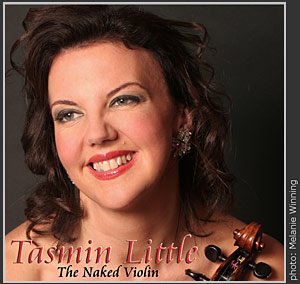
But as you know I like free music and there has been a buzz about The naked violin - a fascinating new classical album from UK violinist Tasmin Little. It is a free download and comprises three very different solo violin pieces, with an introductory talk if you are interested. I am impressed that 'easy' works weren't selected - there is a nice Bach partita, but the other two tracks are modern. It was recorded on January 5 this year - fairly rapid turnaround (but only 35 minutes long). Follow the link from her home page or go straight to the download page